
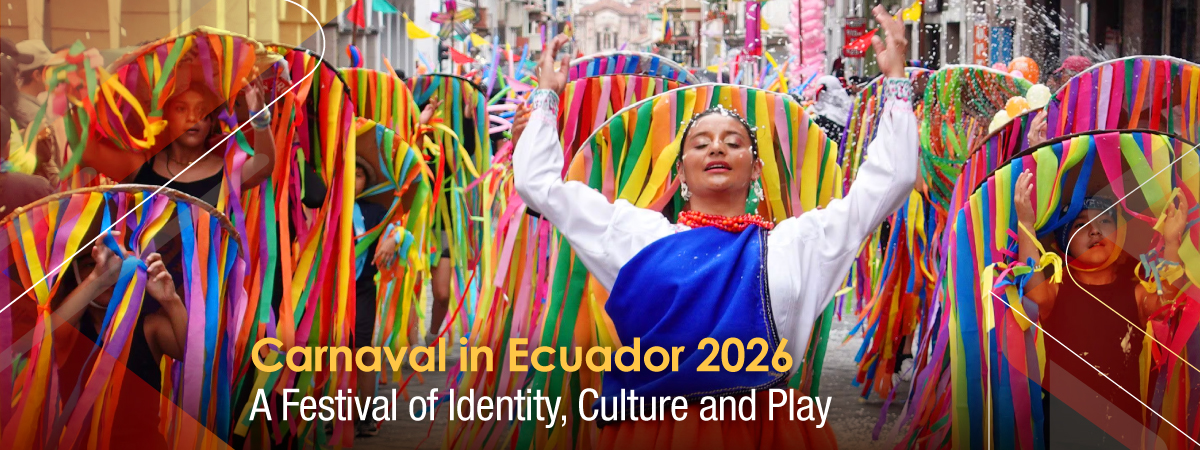
Carnaval in Ecuador 2026: A Festival of Identity, Culture and Play
In Ecuador, Carnaval is far more than a festive break, it is one of the year’s most vivid cultural expressions. With roots in both Catholic and ancestral traditions, it manifests differently across the country: from playful street games to solemn parades, from water fights to heritage rituals.
This year, Carnaval 2026 will be celebrated from Saturday 14 to Tuesday 17 February, offering travellers one of the most vibrant long weekends of the year and a perfect opportunity for immersive cultural travel.
What Does Carnaval Mean in Ecuador?
Carnaval in Ecuador blends pre‑Lenten Catholic traditions with Indigenous rituals linked to water, fertility, and renewal. For the Andes, it coincides with the Pawkar Raymi, a Kichwa celebration of the flowering season — making water not just a game, but a symbolic element of cleansing and abundance.
As Catholic influence grew during colonial times, this spiritual and seasonal ritual merged with European Carnival festivities; resulting in the unique Ecuadorian fusion we see today.
Playful Traditions with Deeper Meaning
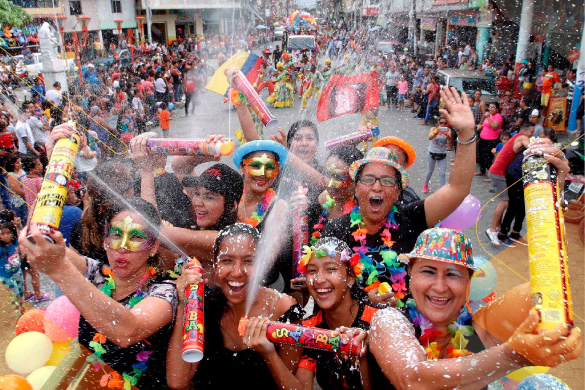
In many Ecuadorian towns, especially in the highlands and coastal regions, it is common for children and teenagers to play Carnaval with:
- Buckets or balloons filled with water
- Coloured powders or flour
- Shaving foam or commercial “espuma” spray
- Sometimes even eggs or mud
These playful acts are seen as a release of joy, a levelling of social hierarchies, and a way to symbolically “wash away” negativity before Lent. The games may seem chaotic to the outsider, but they are rooted in ritual, reciprocity and community interaction.
That said, many towns are now promoting “foam-free” zones or cultural alternatives for visitors and families seeking a more tranquil experience.
Where to Experience Carnaval in Ecuador (2026 Highlights)
Quito – Urban Culture Meets Festival Spirit
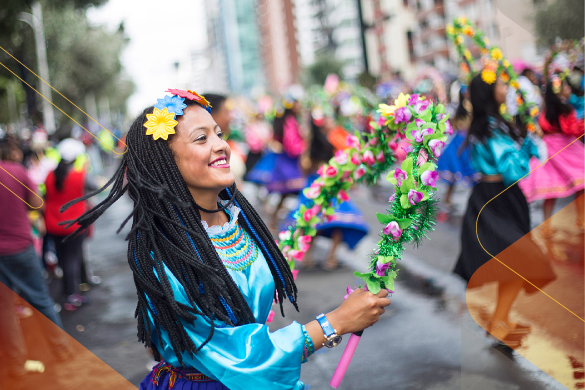
During February, Quito hosts more than 80 official events, including:
- Live concerts in neighbourhood parks
- Traditional “comparsas” or parade performances
- Workshops and markets in cultural centres
- Community events
For agents, Quito offers a perfect base for combining culture, gastronomy and urban celebration, ideal for long weekend city breaks.
Guaranda – The Capital of Carnaval
In the central Andes, Guaranda is synonymous with Carnaval. Expect:
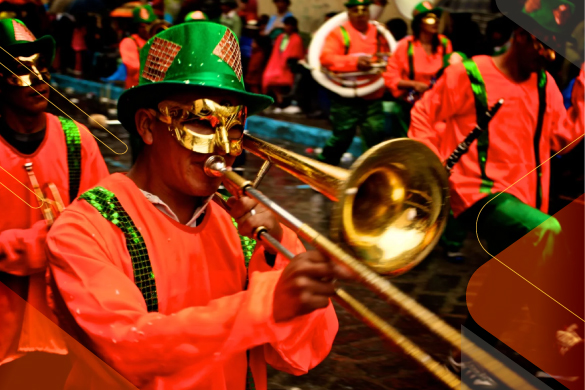
- Daily concerts with national and international artists
- Traditional dances and parades
- Indigenous rituals blended with music and celebration
- A friendly and festive atmosphere in a mountain setting
This is the place to send clients looking for high-energy cultural immersion, especially those curious about the evolution of Indigenous‑Catholic syncretism.
Riobamba – Community Traditions and Local Pride
Starting 8 February, Riobamba’s events include:
- Rural parades across parishes
- Copla (folk poetry) contests
- Cultural exhibitions
- Gastronomy fairs and children’s events
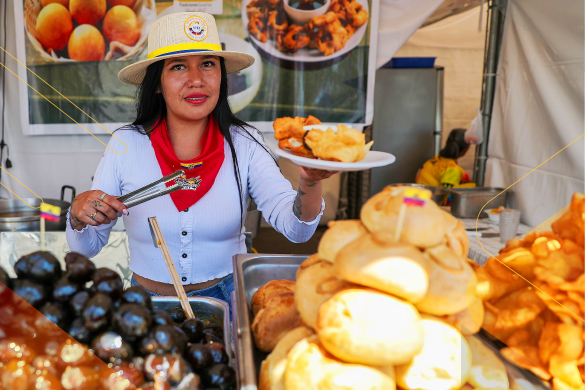
Ideal for travellers wanting authentic, people-led celebration with strong community character; perfect for slow travel and cultural exploration.
Coastal & Highland Alternatives (Beyond Water Fights)
While foam and water games dominate in many towns, not all Carnaval celebrations are wild.
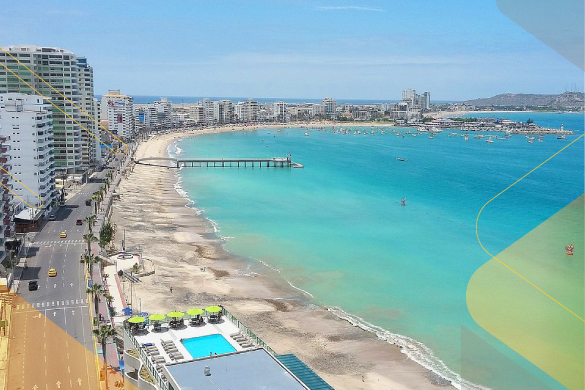
In coastal destinations like Salinas, Atacames or Manta, local authorities organise:
- Foam-free concerts
- Beach volleyball and surf competitions
- Live DJ sets and craft markets
Meanwhile, highland towns may celebrate with ancestral music, food and rituals, providing options for families or clients who prefer cultural immersion over street games.
This regional diversity allows you to segment and tailor packages for each travel profile. From adventure seekers to culture lovers, from families to romantic couples.
Carnaval is not just a holiday — it’s a living tradition, and Ecuador knows how to celebrate.
Read also: