
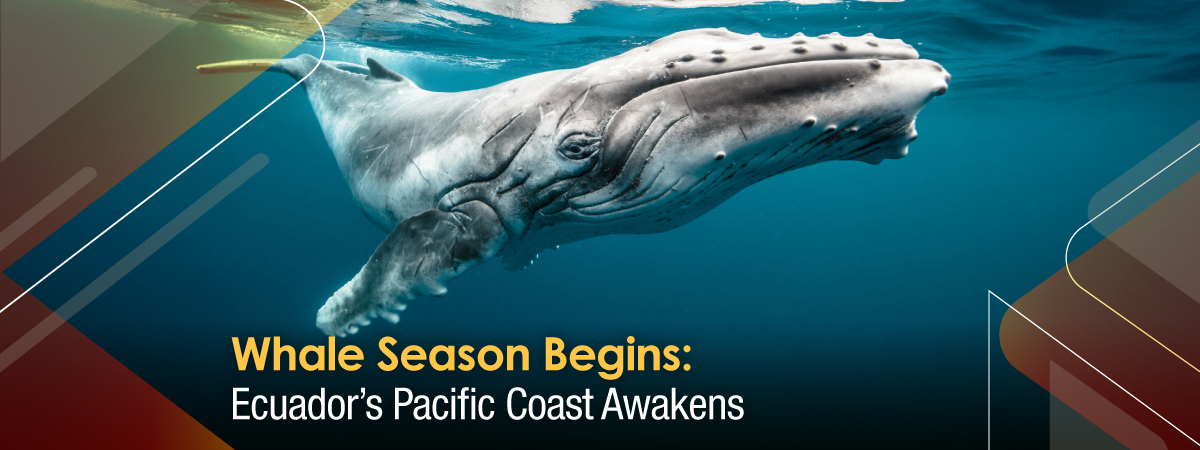
Whale Season Begins- Ecuador’s Pacific Coast Awakens
When travellers think of Ecuador, the conversation often begins with the Galapagos Islands, the Andes, or the Amazon rainforest. Yet every year, along the country’s Pacific coastline, another extraordinary wildlife phenomenon quietly unfolds — one that remains surprisingly underrepresented in many South American itineraries.
Between June and September, Ecuador’s coastal waters welcome the arrival of humpback whales migrating from Antarctica to breed in the warmer waters of the equatorial Pacific. It is a seasonal transformation that turns the coast into one of the most compelling marine wildlife destinations in the region.
For travel designers, this is more than a wildlife excursion. It is an opportunity to introduce a completely different rhythm and an emotional experience into an Ecuador programme.
A Natural Spectacle in Motion
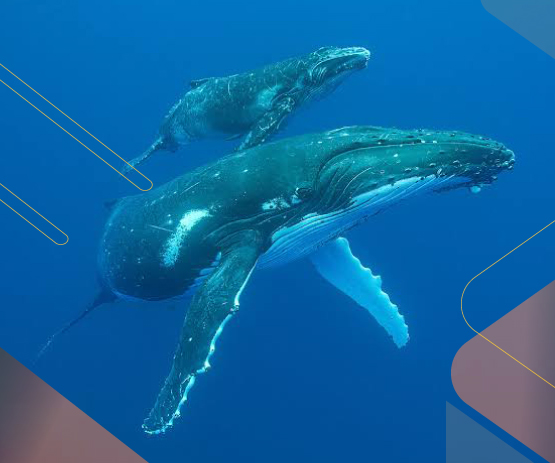
Humpback whales travel thousands of kilometres every year, moving from the cold feeding grounds of Antarctica towards tropical waters suitable for mating and giving birth. Ecuador’s Pacific Coast, particularly around Puerto López and Machalilla National Park, becomes one of the key observation points during this migration.
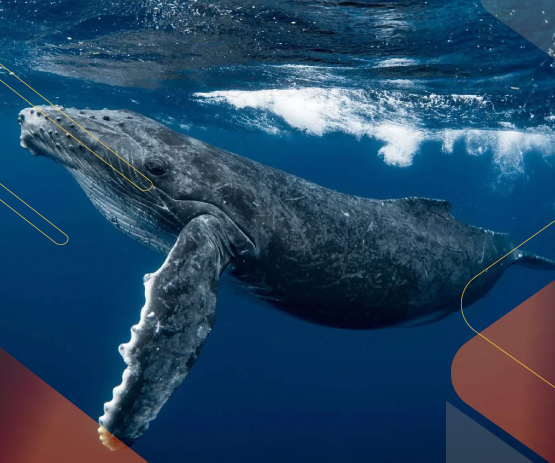
What makes the experience so memorable is not only the presence of the whales, but the intensity of their behaviour. Travellers may witness:
- Breaching displays
- Tail slaps against the ocean surface
- Mothers swimming alongside calves
- Male courtship behaviours and vocal communication
Unlike many wildlife encounters that rely on patience and distance, whale watching often feels immediate, dynamic and emotionally charged. For many travellers, it becomes one of the defining memories of their journey.

Beyond the Galapagos: Expanding Ecuador’s Wildlife Narrative
One of Ecuador’s greatest strengths as a destination is its diversity within relatively short travel distances. Yet in international perception, wildlife often becomes synonymous exclusively with the Galapagos Islands.
Whale season challenges that narrative. It reveals a different side of Ecuador’s biodiversity; one connected to open ocean ecosystems, coastal communities and seasonal migration patterns. This allows travel professionals to position Ecuador not as a single-highlight destination, but as a country of layered and evolving wildlife experiences.
For repeat travellers or clients seeking something less expected, the Pacific Coast introduces freshness into the itinerary design process.
The Rise of Seasonal Travel
Globally, travellers are increasingly planning journeys around specific natural events rather than fixed destinations alone.
This shift has transformed experiences such as the Northern Lights, the Great Migration in East Africa and cherry blossom season in Japan into highly desirable travel moments. Whale season in Ecuador naturally fits within this growing demand for time-sensitive, experience-led travel.
Seasonality creates: Urgency, exclusivity, emotional anticipation and stronger storytelling opportunities. For travel advisors and tour operators, this becomes an important sales tool. Clients are not simply booking a destination; they are booking a moment in time.

More Than Wildlife: The Coastal Experience
What elevates Ecuador’s whale season even further is the context surrounding it.
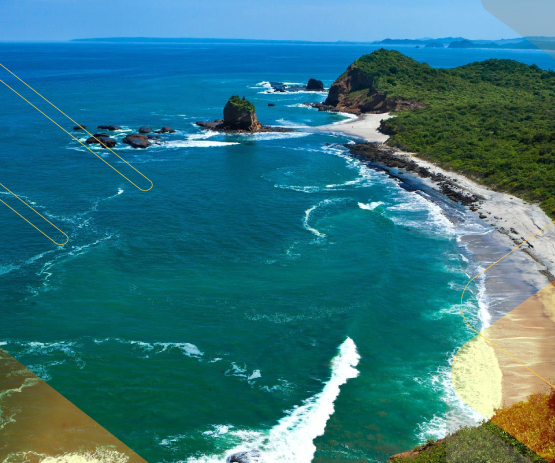
The Pacific Coast offers a softer, more relaxed contrast to the intensity of Galápagos expeditions or high-altitude Andean travel. Here, travellers encounter:
- Coastal gastronomy centred around fresh seafood and traditional Manabí cuisine
- Quiet beach towns with authentic local character
- Sunset experiences along the Pacific shoreline
- Artisan communities and fishing villages
- A slower pace of travel focused on atmosphere and connection
This combination allows whale season to work exceptionally well either as a standalone short journey or as an extension within broader Ecuador itineraries.
Machalilla National Park: A Strategic Addition to Ecuador Itineraries
Located along the Manabí coastline, Machalilla National Park plays a central role during whale season.
Known for its marine biodiversity and coastal landscapes, the park combines ocean encounters with beaches, islands and dry tropical forest ecosystems. Nearby destinations such as Isla de la Plata; often referred to as “the poor man’s Galápagos” — also provide opportunities to encounter blue-footed boobies, frigatebirds and marine life outside the archipelago itself.
For travel designers, this creates significant itinerary flexibility:
- Wildlife-focused coastal extensions
- Soft adventure programmes
- Family-friendly experiences
- Culinary and nature combinations
- Slower-paced luxury journeys
Why This Matters for Today’s Traveller
Today’s travellers are increasingly seeking experiences that feel meaningful, authentic and emotionally engaging. Whale watching along Ecuador’s Pacific coast offers exactly that: a rare opportunity to witness one of nature’s most extraordinary spectacles in a destination that remains refreshingly uncrowded and genuine. These intimate encounters reflect the growing demand for smaller-scale, nature-led experiences that prioritise connection over spectacle.
Whale season is also a reminder that Ecuador’s appeal extends far beyond its most famous landmarks. By incorporating the Pacific Coast into broader itineraries, travel professionals can create journeys that feel richer, more balanced and full of unexpected moments. In an increasingly competitive travel landscape, these hidden highlights often become the memories travellers cherish most. Interested in incorporating Ecuador’s whale season into your upcoming itineraries?
Let us help you craft unforgettable coastal experiences that blend wildlife, gastronomy and the authentic charm of Ecuador’s Pacific shores.
Read also: